Resonance or Distortion? — An Interactive Self-Assessment
An interactive self-assessment to help you identify whether you're operating from resonance or distortion in key areas of your life. Use this as a starting point for your TRI journey.
Resonance or Distortion? — An Interactive Self-Assessment
A Practical Tool from The Resonant Identity
Before you can build an identity that resonates, you need to know where Distortion has crept in.
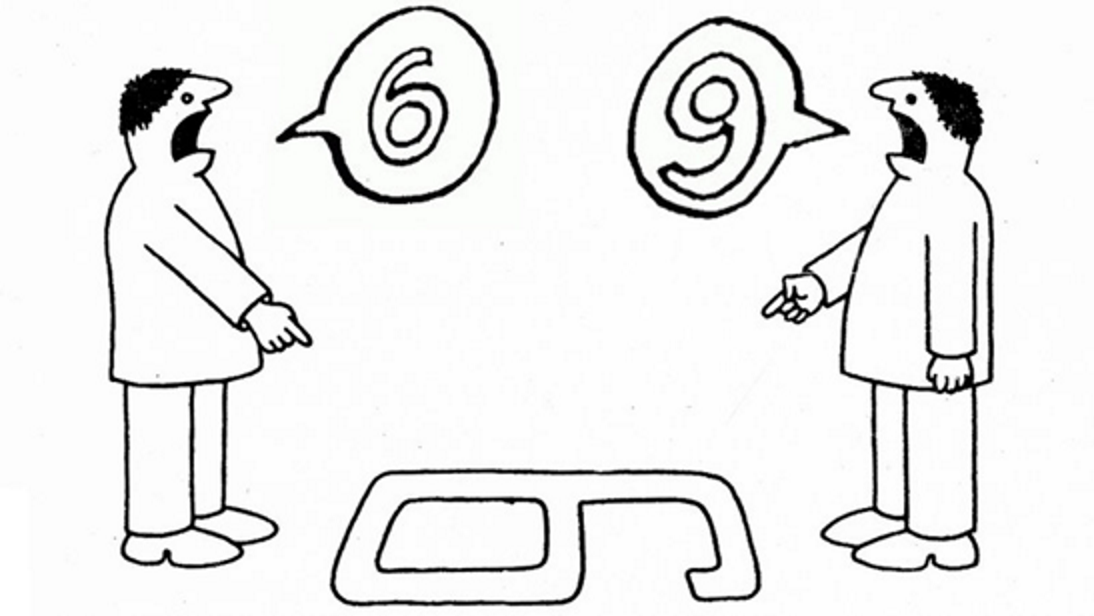
Just like the 6 vs. 9 example in this article, our reality is shaped by our perception of it
— and therefore, can be shrouded in Distortion because of how our point-of-view shapes it.
This self-assessment is designed to help you identify — in three key areas of your life —
whether you are operating from Resonance (alignment with your actual values and signals)
or Distortion (beliefs and behaviors shaped by fear, old narratives, or external pressure).
There are no right or wrong answers.
— Only honest ones.
How to Use This Assessment
Grab a piece of paper and a pen.
For each statement below, rate how true it feels for you on a scale of 1-5 using this scale:
1 = Almost never true for me
2 = Rarely true
3 = Sometimes true
4 = Often true
5 = Almost always true
Complete the assessment in one sitting, without overthinking.
Remain calm, focused, and present with your surroundings.
Simply choose your first instinctive answer.
Section 1: The Triad — Body, Mind, and Story
Somatic Experience and Cueing refer to the three channels through which identity is experienced:
The body (somatic cues).
The mind (cognitive patterns), and
The narrative (the story you carry about yourself).
Use your awareness and cueing to answer each question earnestly.
Rate each statement (1–5):
When I am about to make a significant decision, I check in with how my body responds — not just my thoughts.
I can distinguish between a belief I have genuinely examined and one I inherited from my environment.
The story I tell about who I am feels chosen rather than imposed.
I am aware of at least one narrative I carry about myself that may not be accurate.
My body, thoughts, and self-narrative are generally pointing in the same direction.
Your Cueing Score: Add your scores for statements 1–5.
20–25: Strong alignment — you are operating with high internal coherence.
13–19: Moderate alignment — some channels are clear, others may need attention.
5–12: Significant fragmentation — this is a priority area for TRI work.
Section 2: Interpretive Hygiene
Interpretive Hygiene is the practice of regularly examining how and why
you are interpreting your experiences and cues, not just what is happening.
Poor Interpretive Hygiene of our Data Points leads to Distortion
_— reading threat where there is none, reading validation where you should be questioning, and so on.
Rate each statement (1–5):
When someone criticizes me, I can separate the useful signal from the emotional noise.
I notice when I am interpreting a neutral event through a fear-based or shame-based lens.
I regularly question whether my perception of a situation is accurate, or whether I am filling in gaps with assumptions.
I can hold two contradictory interpretations of the same event simultaneously without needing to immediately resolve them.
I have at least one practice (journaling, conversation, meditation) that helps me examine my interpretations before acting on them.
Your Interpretive Hygiene Score: Add your scores for statements 6–10.
20–25: High interpretive clarity — you are filtering signal from noise effectively.
13–19: Moderate clarity — some distortion patterns likely present.
5–12: Significant distortion risk — interpretive hygiene is an urgent focus.
Section 3: Resonance & Dissonance in Daily Life
This section examines the degree to which your day-to-day life is aligned with your actual identity
— or in tension with it.
Rate each statement (1–5):
The work I do most days feels connected to something I genuinely care about.
My closest relationships bring out aspects of me that feel authentic, not performed.
I know the difference between a "should" and a genuine "want" in my choices.
When I feel dissonance — that something is off — I treat it as information rather than something to suppress.
At the end of most days, I feel like I showed up as myself, not a version of myself shaped by what others expected.
Your Resonance/Dissonance Score: Add your scores for statements 11–15.
20–25: High resonance — your daily life is closely aligned with your identity.
13–19: Moderate resonance — some areas of drift or performance present.
5–12: Significant dissonance — identity alignment is a primary area of focus.
Reading Your Results
Total Score: Add all three sections (max 75):
60–75: You are operating with strong overall resonance.
— TRI can help you deepen and sustain this.40–59: You have meaningful alignment in some areas, with distortion in others.
— Focus on your lowest-scoring section first.15–39: Significant distortion patterns are likely present across multiple areas.
— The Resonance Core Framework and TRI can help you as you seek alignment in your life.
What Distortion Looks Like
It's worth naming clearly what distortion patterns feel like from the inside:
Constantly second-guessing decisions that seemed clear
Feeling like you're performing a version of yourself rather than being yourself
Reacting strongly to feedback that doesn't match your self-image
Saying yes when you mean no — and rationalizing it
Feeling that your life "makes sense on paper" but feels hollow in practice
If any of these resonate, you are in the right place.
Your Next Step
Based on your results, here are the recommended next steps:
If your lowest score is in The Triad: Start with Day 1 of the 7-Day Identity Activation Challenge — it focuses specifically on somatic cue awareness.
If your lowest score is in Interpretive Hygiene: Listen to Episode 1 of The Resonant Identity and read the companion article — both address the mechanics of interpretive distortion.
If your lowest score is in Resonance/Dissonance: Join the TRI Community on Facebook — the community component of TRI is specifically designed to surface and support resonance in daily life.
Written by Terence Waters. The Resonant Identity is a living extension of The Resonance Core Framework™.