Why Sleep (and Sleep Cycles) Matter More Than You Think
Your body doesn't just rest at night. It recalibrates. Discover why sleep cycles are your nightly maintenance crew and how rhythmic sleep becomes the foundation for training, focus, and sustainable transformation.
Why Sleep (and Sleep Cycles) Matter More Than You Think
Your body doesn't just rest at night — it recalibrates.
Most people think sleep is simply "recharging the battery."
But sleep isn't passive.
It's rhythmic, structured, and deeply intelligent.
Every night, your body moves through a series of cycles — light sleep, deep sleep, and REM — each one performing a different job. When these cycles flow smoothly, everything in your life works better: your mood, your energy, your training, your creativity, your metabolism, your focus.
When they don't, everything feels harder than it should.
Sleep isn't just rest.
It's regulation.
1. Sleep cycles are your body's nightly maintenance crew
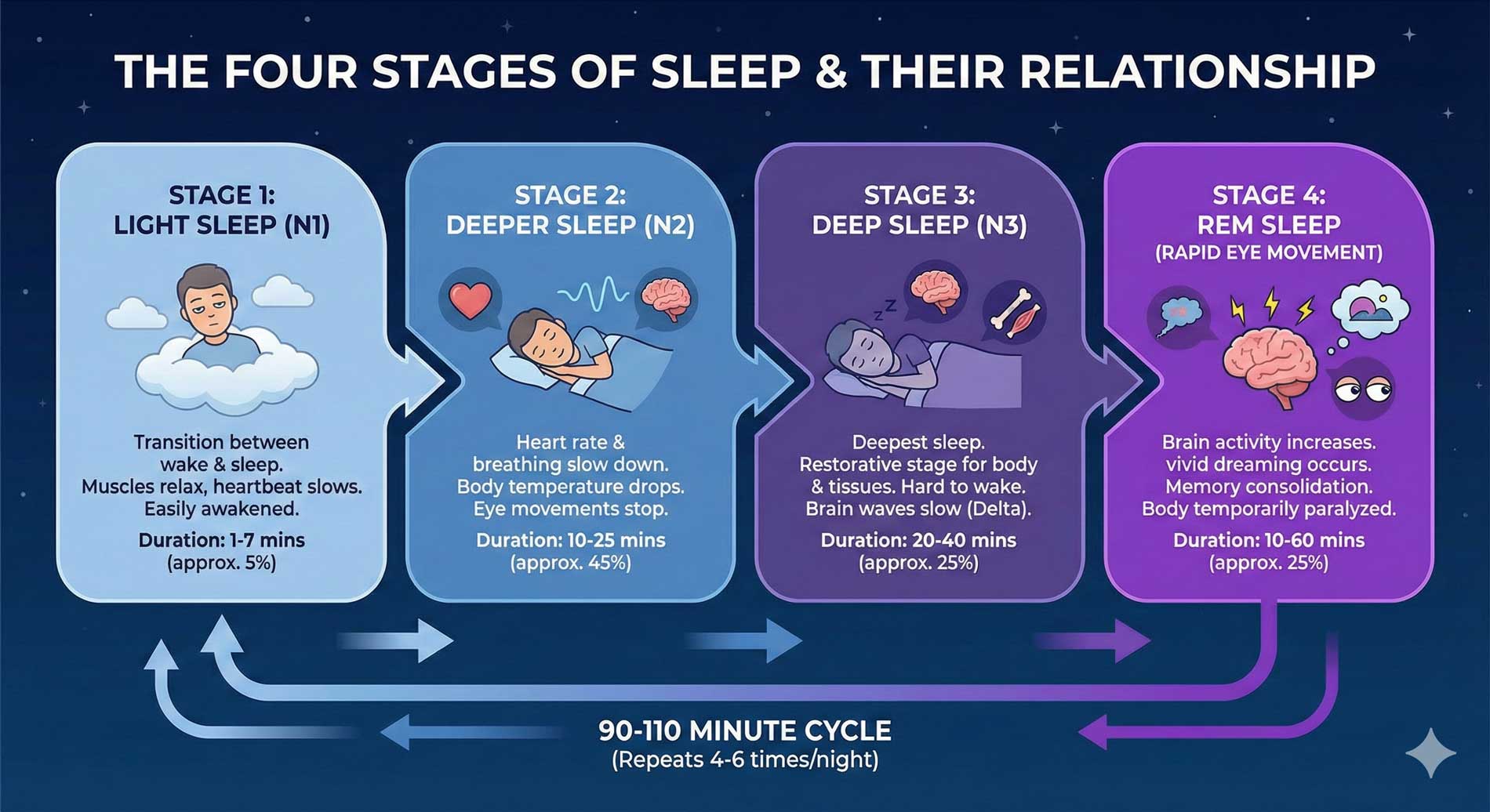
Each stage of sleep has a purpose:
- Light sleep (N1) — The transition between wake and sleep. Your muscles relax, heartbeat slows, and you're easily awakened.
- Deeper sleep (N2) — Your heart rate and breathing slow down further. Body temperature drops. Eye movements stop. This stage makes up the largest portion of your sleep cycle.
- Deep sleep (N3) — The restorative stage. Your body repairs tissue, supports muscle growth, and restores physical energy. Brain waves slow significantly, making it hard to wake.
- REM sleep — Brain activity increases, vivid dreaming occurs. This stage processes emotions, consolidates memory, and enhances learning. Your body becomes temporarily paralyzed to prevent acting out dreams.
You don't need to memorize these stages — you just need to understand that your body cycles through them in waves. When those waves are disrupted, you feel it the next day.
This is why "I slept 7 hours but feel exhausted" is a real thing.
It's not just the quantity of sleep — it's the quality and the rhythm that truly matters.
2. Your circadian rhythm sets the stage for everything
Your sleep cycles don't exist in isolation.
They're guided by your circadian rhythm — your internal 24‑hour clock.
This clock controls:
- When you feel alert
- When you feel sleepy
- When your hormones rise and fall
- When your body repairs itself
- When your metabolism is most active
- When your brain is primed for focus or creativity
When your circadian rhythm is aligned, your sleep cycles flow naturally.
When it's misaligned, your sleep becomes fragmented, shallow, or delayed.
This is why consistent wake times matter so much, even on weekends and holidays. They anchor the entire system in predictable patterns (rhythms) that help the body know exactly how to handle your sleep schedule and automatic regulation.
3. Sleep is the foundation of sustainable training
You can train hard.
You can eat well.
You can follow the perfect program.
But if your sleep is chaotic, your progress will always feel like a fight, thereby killing your health and wellness goals.
Good sleep supports:
- Muscle recovery
- Strength gains
- Hormonal balance
- Appetite regulation
- Motivation
- Emotional resilience
This is why so many people feel like they're "doing everything right" but still spinning their wheels.
Their training is solid — but their sleep cycles are out of sync.
4. You don't need perfect sleep — you need rhythmic sleep
Just like training, sleep doesn't need to be flawless.
It needs to be consistent.
A stable wake time.
A gentle wind‑down.
Light exposure in the morning.
Dimness in the evening.
No forcing sleep — just creating the conditions for it.
When your sleep becomes rhythmic, your days become easier.
Your workouts feel smoother.
Your mood stabilizes.
Your creativity returns.
Your body stops fighting you and starts working with you.
5. Your body wants rhythm — not rigidity
Sleep cycles aren't mechanical.
They're biological waves.
You can't force them.
You can only support them.
And when you do, everything else in your life — training, work, creativity, emotional regulation — becomes more stable, more sustainable, and more aligned.
Because sleep isn't just a nightly event.
It's the foundation of your entire life's rhythm.
Next Steps
Ready to optimize your sleep for better recovery and performance? At Fluxline, we approach wellness as emotional architecture — fluid, personal, and deeply adaptive.
Whether you're looking to improve training recovery, regulate energy levels, or build sustainable routines that work with your body's natural rhythms, we're here to help you create systems that support your transformation.
Explore our personal training services or get in touch to start building rhythmic wellness into your life.